Reviewing Mexican Flower Embroidery Digital Papers
As a designer who has spent years digitizing and stitching thousands of machine embroidery design files, I approach every new asset with a critical eye. It is not enough for a pattern to look pretty on a screen; it must translate beautifully into thread, withstand the tension of the hoop, and appeal to the end customer. Recently, I evaluated the Mexican Flower Embroidery Digital Papers collection to determine its viability for real-world commercial and personal projects. This is not just a review of aesthetics, but an analysis of how these Graphics perform when applied to tangible goods.
First Impressions and Visual Personality
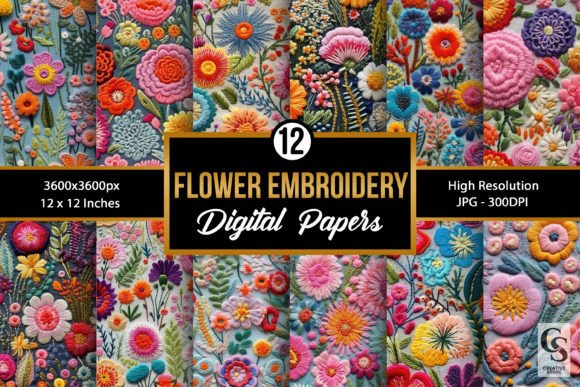
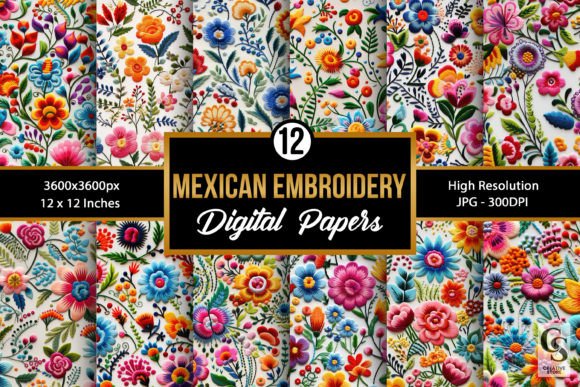
Upon opening the zip file, the immediate impression is one of vibrant cultural warmth. The collection includes 12 distinct seamless Patterns, each capturing the essence of traditional Mexican floral motifs. At 300dpi and sized at 3600 x 3600 pixels (12″ x 12″), the resolution is sufficient for high-quality printing and detailed digital mockups. The mood is festive yet elegant, avoiding the cartoonish trap that many folk-art designs fall into. The shapes are organic, with a layout that feels balanced rather than rigid. For an embroidery designer, this visual personality suggests versatility. These are not just decorative elements; they are storytelling assets that can elevate a simple handmade product into a boutique-quality item.
Real-World Application: The Custom Tote Bag Scenario
To test the practical utility of these design assets, I envisioned a specific client project: a custom embroidered tote bag for a local botanical garden’s spring fundraiser. The goal was to create a tote bag design that felt artisanal and exclusive. Using the Mexican flower patterns as a base, I considered how the dense, colorful motifs would interact with canvas fabric. Unlike a simple satin stitch logo, these patterns offer a rich texture that mimics the look of complex fill stitch work without necessarily requiring the same digitizing effort if used as printed transfers or sublimation backgrounds paired with simple embroidery accents.
If you are an Etsy seller or run a craft business, imagine using these patterns to create unique packaging inserts or branded tissue paper. The high resolution ensures that when printed, the colors remain crisp. For a personalized gift like a kitchen towel or apron, these patterns can serve as the central visual theme, with simple running stitch outlines added by machine to give it that tactile, handcrafted feel. The key here is integration. The patterns should not overpower the item but enhance its perceived value.
Performance in Commercial Embroidery Projects
When considering these files for commercial embroidery, we must distinguish between using them as direct embroidery files versus reference graphics. Since these are JPGs, they are best utilized as visual guides for digitizing or as printed elements. For sweatshirt embroidery, a bold Mexican flower motif can be placed on the back or sleeve. However, one must be cautious with stitch density. If you digitize these patterns directly from the image, ensure you do not create a solid block of thread that will make the garment stiff and uncomfortable. Instead, break up the design with negative space or use lighter thread colors to maintain fabric drape.
For baby embroidery items, such as onesies or burp cloths, the vibrant colors are appealing, but safety and comfort are paramount. Avoid placing dense floral clusters where they might rub against sensitive skin. A better approach for small shop products is to use a single flower element from the pattern set as a focal point on a cap or hat. Curved surfaces like caps require careful hooping and stabilizer selection to prevent puckering, especially with intricate floral details.
Where Caution Is Required
While the aesthetic is strong, there are limitations. These patterns are intricate. If you attempt to stitch them at a very small hoop size, such as a 4x4 inch hoop, fine details may get lost. Tiny petals and thin stems can become indistinct blobs of thread if the needle penetration is too dense. Additionally, on dark fabrics, you must ensure your thread colors have enough contrast. A dark blue flower on a black shirt will vanish. Always test your design on scrap fabric first, preferably in both light and dark variations, to check for visibility and clarity.
Textured fabrics present another challenge. On terry cloth or heavy denim, the subtle gradients in the digital paper may not translate well if you are trying to mimic the look with thread. In such cases, consider using the pattern for a printed patch or applique. An applique design approach allows you to cut out the flower shape from fabric and stitch it down, preserving the intricate detail of the original graphic without thousands of stitches. This is particularly useful for embroidered patch creation, where durability and visual impact are critical.
Enhancing Brand Consistency and Customer Trust
For small business merchandise, consistency is key. Using a cohesive set of 12 patterns allows you to create a recognizable brand identity. Whether you are selling holiday embroidery items during the festive season or everyday custom apparel, having a unified visual language builds customer trust. When buyers see a professional, well-thought-out design, they perceive higher quality. This perception directly impacts buyer engagement and can justify a higher price point for your finished product.
Moreover, these digital embroidery file references can be used to create stunning printable mockup images for your online store. High-resolution previews help customers visualize the final product, reducing hesitation and increasing conversion rates. As a creative entrepreneur, your ability to present your work professionally is just as important as the stitching itself.
Practical Designer Notes
- Test Before Production: Always stitch out a sample on the actual fabric you intend to use. Check for puckering and thread breaks.
- Stabilizer Selection: Use the appropriate stabilizer for your fabric type. Cut-away stabilizers are often best for stretchy fabrics like t-shirts, while tear-away works for stable woven materials.
- Color Contrast: Review your design in black and white to ensure the shapes are distinct. If the design looks muddy in grayscale, it will likely lack definition when stitched.
- Licensing Check: Before selling items made with these patterns, confirm the license terms. Ensure you have the right to use them for commercial purposes if you are an Etsy seller or boutique owner.
- Digitizing Care: If converting these graphics into embroidery files, pay attention to stitch direction. Follow the natural flow of the petals to enhance the three-dimensional look of the flower.
In conclusion, the Mexican Flower Embroidery Digital Papers offer a rich resource for designers willing to put in the effort to adapt them for thread. They are not plug-and-play embroidery files but rather high-quality visual foundations. With careful planning, proper stabilizer use, and thoughtful digitizing, they can transform ordinary items into exceptional handmade products that stand out in a crowded market. Whether for a wedding gift, a boutique line of apparel, or seasonal decor, these patterns hold significant potential for those who understand the nuances of embroidery production.